Keep It Off is a medical weight loss center in Sacramento. For years its new patients arrived through referrals from local hospitals, which is about as dependable a channel as a medical practice can have. Somebody else did the marketing, and the patients showed up.
Then the hospitals started building weight loss programs of their own.
Beginning in 2017, the hospitals that had been sending patients launched competing programs. Referrals slowed and then stopped. A business that had never needed to generate a single lead of its own suddenly had to generate all of them.
There was a Google Search campaign already running, and it was producing leads at roughly $150 each. At that price the math did not work. Spending more on it would have made the problem larger rather than smaller.
What they needed was a lead source that could replace the hospitals entirely, at a cost the practice could carry month after month.
The existing search campaign was paying for a great deal of traffic it did not need. We tightened keyword management, ran continuous keyword experiments to find the terms that actually converted, and used In-Market audience bid adjustments to pay more for people already shopping for a weight loss program and less for everyone else.
Cost per lead came down from $150 to $45. Cost per click fell 78%, which is where most of the saving came from.
Search only reaches people who are already looking. That is a real ceiling, and for a practice trying to replace an entire referral channel it was too low to get there on its own.
We built Facebook and Instagram campaigns to reach people earlier, before they had started searching for a program. Different job, different part of the funnel, same patient.
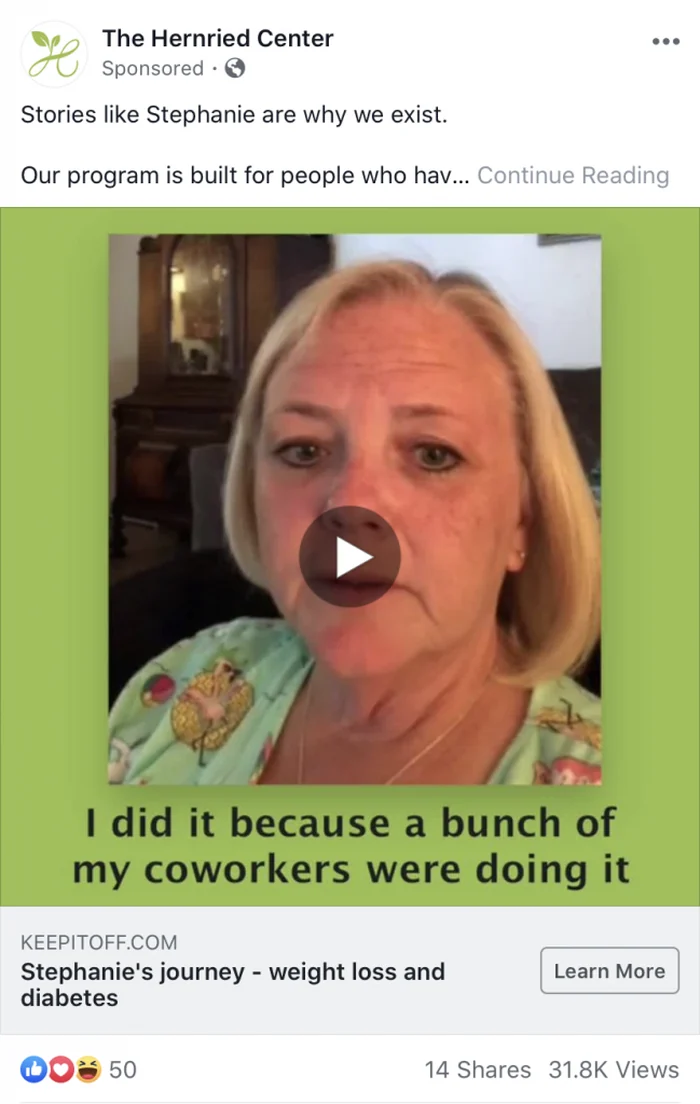
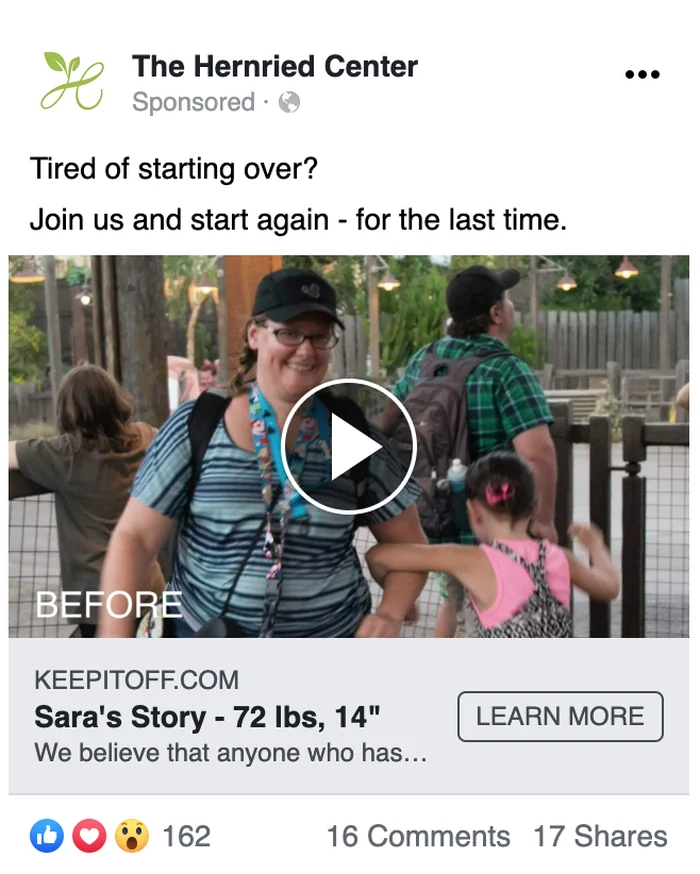
The social campaigns ran eight video ads, each built around an actual patient and what the program did for them. No stock imagery anywhere in the account.
Weight loss advertising is a category full of dramatic claims from businesses nobody has heard of. A real person from your own city, saying plainly that it worked, is one of the few things in that category a stranger will believe.


Search captured demand that already existed. Social created demand that did not. Running both meant the practice was no longer dependent on how many people happened to type the right query in a given month.
That mattered more than the cost per lead figure. The original problem was concentration: one channel, controlled by somebody else, that could be shut off without notice. Two channels the practice controls was the actual fix.
Book a free 30-minute discovery call and we’ll look at what it would take to build a lead source of your own.
Book a Discovery Call